Sharjah Sports City
A stadium embedded into the ground surface. Approached from above, it reads as landscape; from below, as arena.
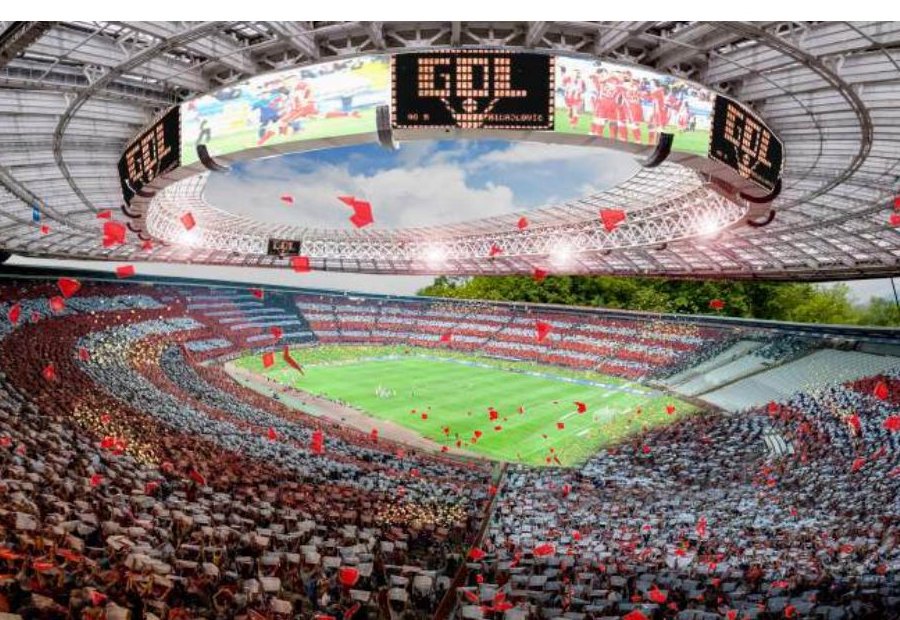
A sports city is, programmatically, a public-leisure complex that runs on the calendar of competitions. Most of the year, the stadium dominates the site as a closed object. The brief here was to design something that worked as urban landscape on non-event days, a place to walk, run, sit, and only became an arena when needed.
The strategy was to bury the lower ring of the seating bowl. Approaching from the surrounding landscape, the visitor walks down a gentle slope toward the entry; the stadium reveals itself only at the threshold. From the outside, the building reads as a low cap on a hill, a piece of topography, not a piece of stadium architecture.

On non-event days the building disappears. That's not architectural modesty, it's making the space useful 365 days a year instead of 30.


The dome, which carries the lighting rig and screen ring, is structurally what allows the lower bowl to be sunk, without the dome's tension, the earth-retaining geometry wouldn't have closed. So the architectural move and the structural move are the same move, which is what I wanted.
Outside the stadium, the masterplan continues this logic: parking is mostly subsurface, sports fields blend into landscaped berms, and the residential cluster on the east edge sits low. The whole site is meant to be walked through on a normal afternoon.