Solar Decathlon
Now Howse
A zero net energy house designed to sell power back to the grid, not consume it.
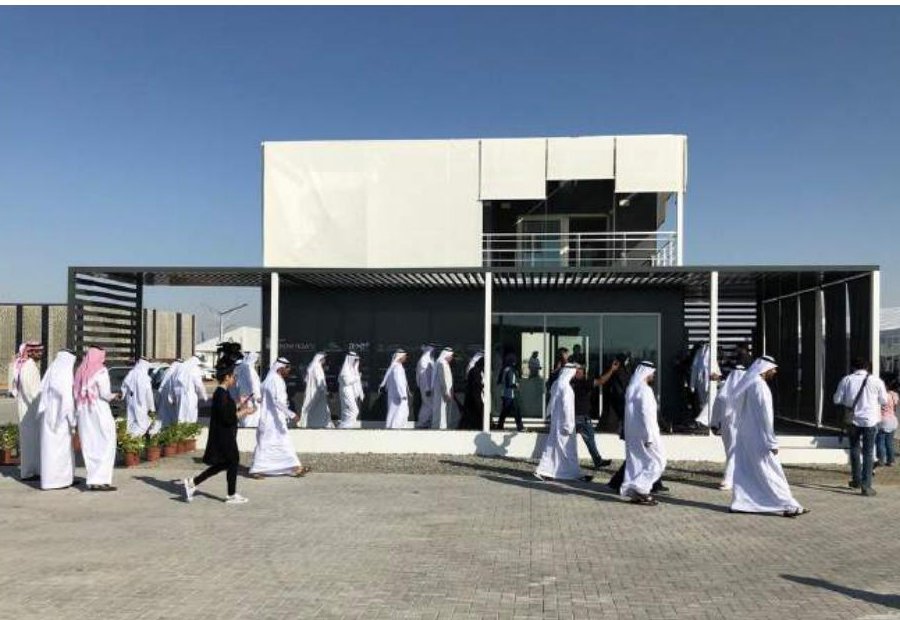
The brief was deceptively simple: design a house that, over a year, produces more energy than it consumes. The site, Dubai, peak summer ~45°C, turned every passive strategy into a tightrope walk. Shade aggressively, and you lose daylight. Open up for cross-ventilation, and you import heat. The house had to negotiate both.
Our response was a compact two-storey volume wrapped in a louvered second skin. Behind the skin sits a flat photovoltaic array, completely hidden from the elevations, the building reads as architecture, not as a power plant. The skin shades the envelope; the array, freed from being a façade element, can be optimised purely for yield.
The roof had to disappear. Once it did, the house was free to be a house, not a piece of energy infrastructure with rooms attached.
Drawings


Notes on the strategy
Three loops drove the energy balance. Passive cooling: high thermal mass, deep overhangs, and a shaded rear courtyard creating a stack-effect chimney. Active generation, flat-mounted polycrystalline PV optimised for the latitude, plus solar-thermal for domestic hot water. Demand reduction, heavy insulation in the CLT envelope, low-power appliances, and an A/C system sized only for the worst weeks of August.
In simulation the house produced a small annual surplus. What I took from the project was less the technical detail than the pattern: every passive move buys you a smaller active system, which buys you a smaller balance-of-system, which buys back capital cost. Sustainability isn't a layer; it's a chain.